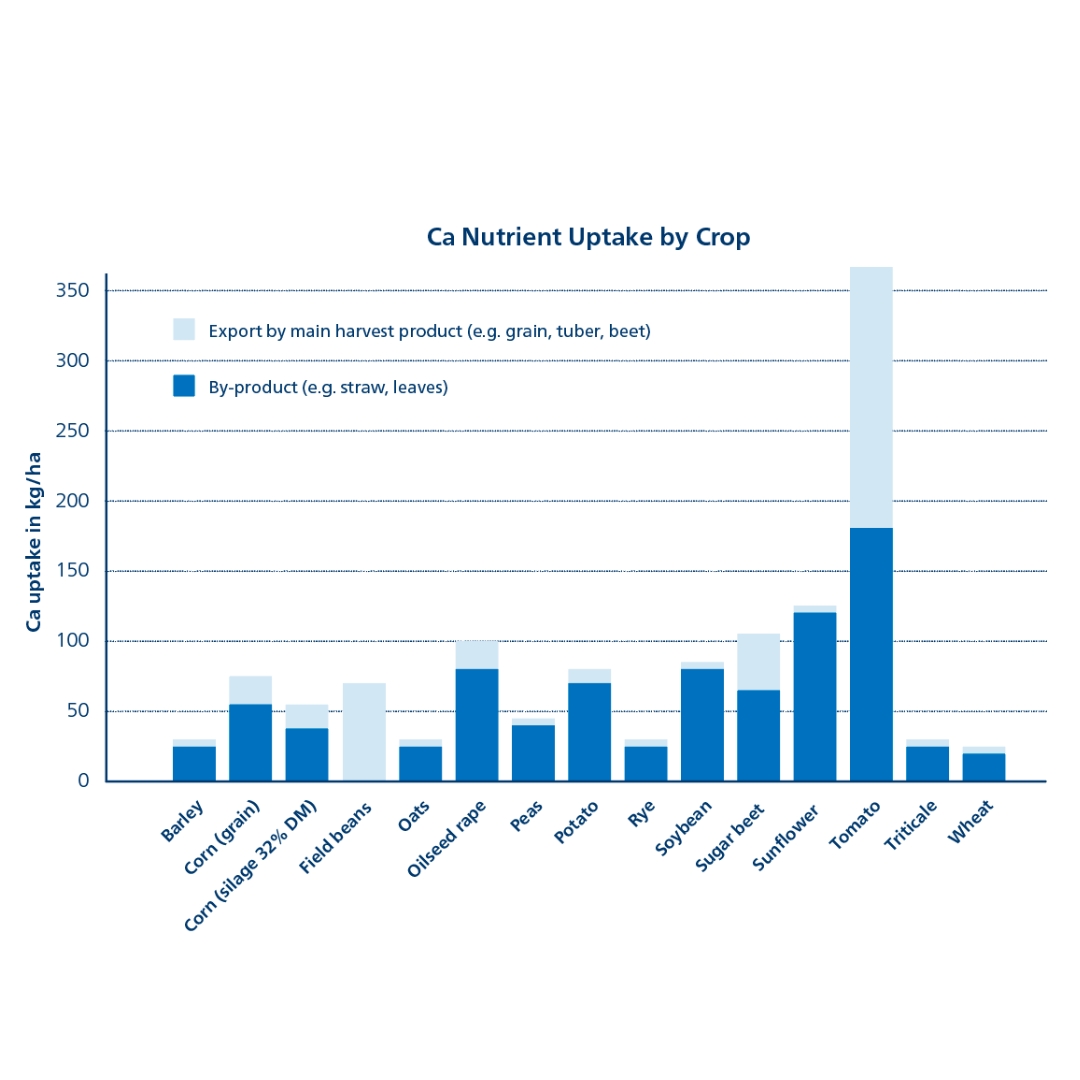

Although calcium removal through harvested crops is typically moderate, this essential nutrient is often underestimated in broad-acre crop production. However, calcium plays a critical role in plant structure, signaling, and stress resilience.
This article explores calcium’s importance as a secondary macronutrient, how to recognize and address deficiencies, and how to effectively supply it—particularly through calcium carbonate and calcium sulfate.
Calcium in soils: availability and influencing factors
Calcium in soil is primarily bound to soil particles and becomes available to plants through exchange from the soil particle, weathering of minerals and decomposition of organic matter. Two key factors influence calcium availability:
Soil texture: Sandy soils have fewer binding sites and lower calcium retention compared to silty or clay soils. Especially in heavy clay soils calcium promotes the aggregation of soil particles improving aeration, water infiltration, and root penetration.
Soil pH: Acidic soils (pH < 6.5) reduce calcium availability
It’s important to note that soil pH alone doesn’t provide a complete picture of calcium availability. A comprehensive soil test is essential to assess both pH and exchangeable calcium levels which is the foundation for your Calcium fertilization strategy.
The role of calcium in crops
Calcium is vital for plant development, ensuring strong cell walls through its interaction with pectin and playing an important role in growth, water regulation, and nutrient absorption. It helps stabilize cell membranes, making plants less vulnerable to pests and diseases, and acts as a messenger within cells to support fast responses to stress. Its role in cell signaling lets plants quickly adjust to environmental changes and trigger necessary defenses.
During reproduction, calcium supports pollen tube growth and seed set, directly affecting yields and quality. Managing calcium nutrition is key to healthy crops and maximizing agricultural productivity.