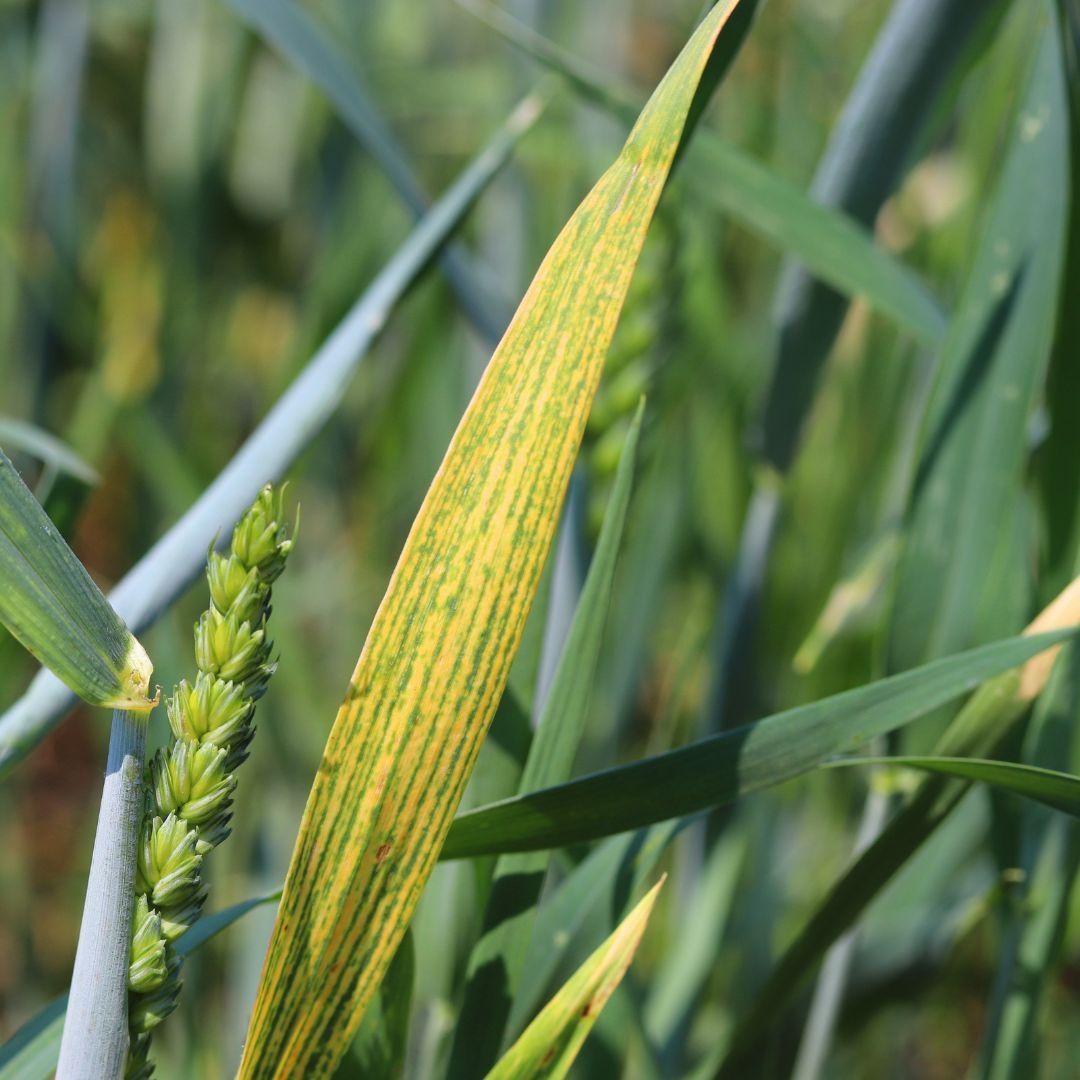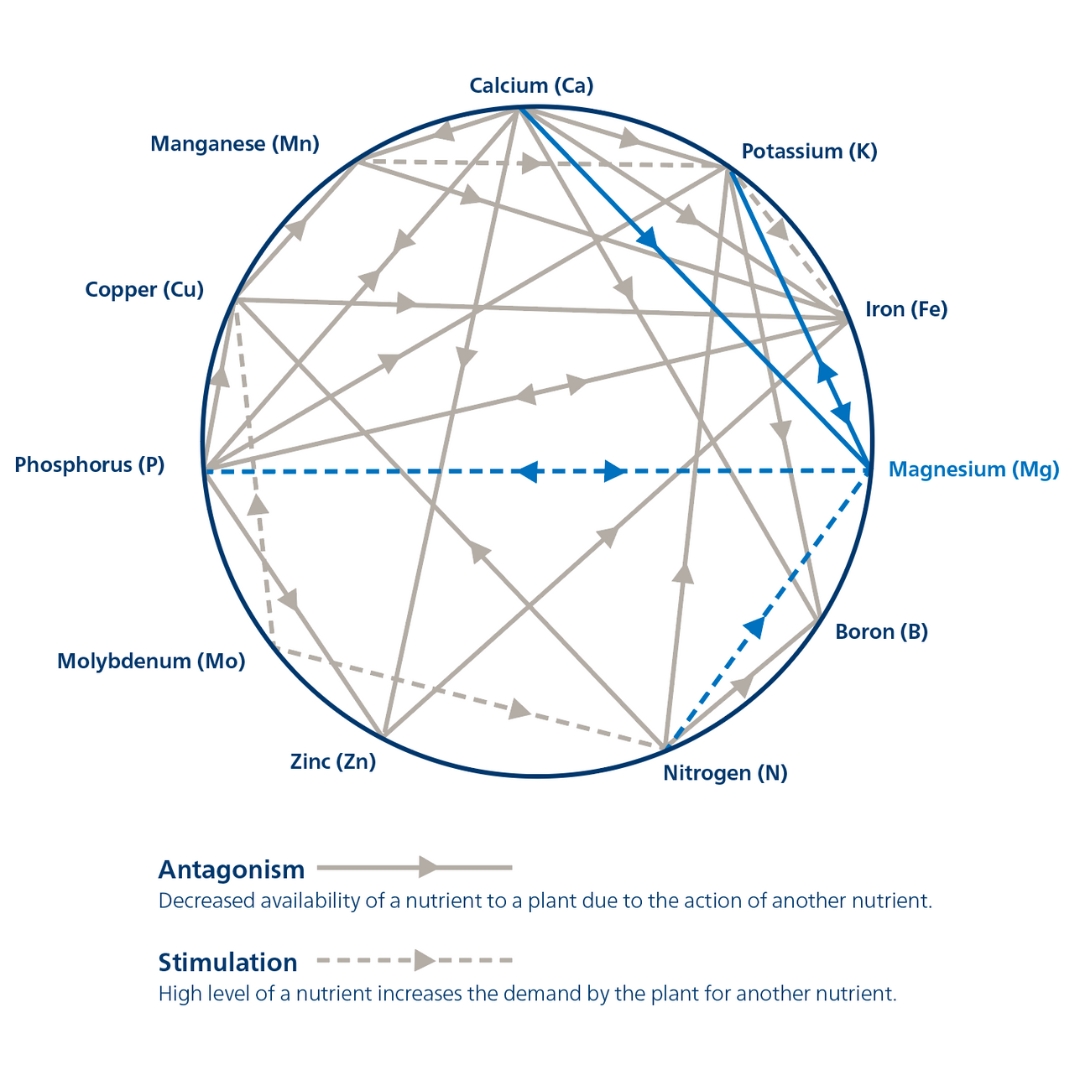

This article explores magnesium’s role as a secondary macronutrient, how to identify and correct deficiencies, its interaction with other nutrients, and how to effectively supply it through micronized calcium magnesium carbonate.
The Role of magnesium in crops
Magnesium is the central atom in chlorophyll, making it indispensable for photosynthesis. Beyond this, magnesium activates over 300 enzymes involved in chlorophyll formation, carbohydrate transport, enzyme activation, and lipid metabolism.
It helps to regulate the movement of carbohydrates and sugars from leaves to roots and fruits, directly influencing yield and quality. During grain and fruit development, magnesium supports sugar transport and starch formation.
Crop demand and estimated magnesium uptake by crop
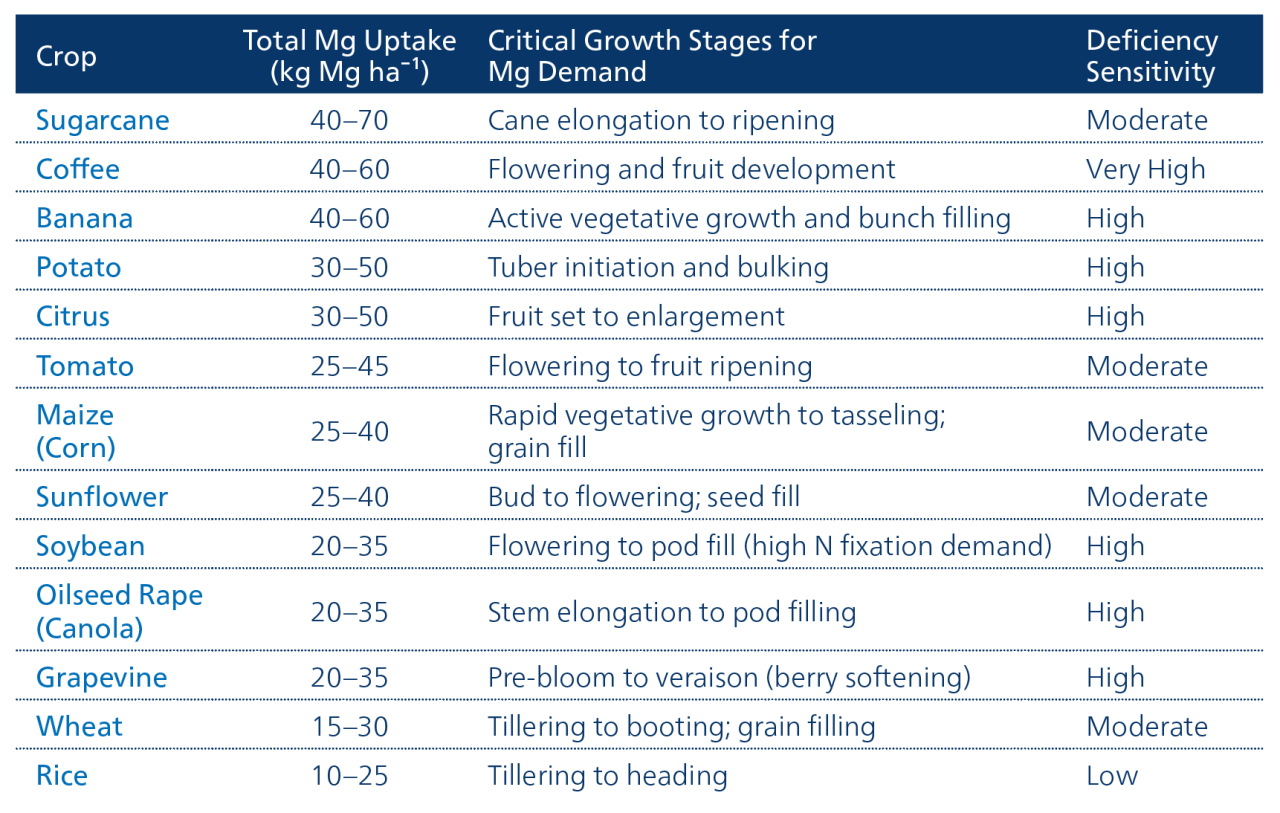
All plants require magnesium, but the amount needed varies among crops and growth stages, with typical requirements ranging from 15 to 70 kg per hectare. For example, high-demand crops such as sugarcane, potatoes, coffee, and banana may require between 30 and 60 kg of magnesium per hectare, while moderate-demand crops like corn, wheat, and soybeans typically need between 15 and 40 kg per hectare. Additionally, some crops—including soybean, oilseed rape, potato, coffee, citrus, and banana—are particularly sensitive to magnesium deficiency and may show symptoms more readily if their needs are not met.