
Why remineralization makes drinking water safe

What if “pure” water isn’t enough? Discover how remineralization restores essential minerals to make drinking water truly safe and protective.

Woman drinking water

Universal access to safe, affordable drinking water is not only one of the United Nations’ sustainable development goals, but according to the World Health Organization, it is also key to maintaining human health, boosting economic growth, and reducing poverty. 

The quality of drinking water makes a huge difference to whether these objectives are achieved. Many countries base their drinking water standards on WHO guidelines but there is no single global standard for drinking water quality1. In the US and EU however, water standards are set and enforced. They can be classified into three main groups, each with its own objectives and areas of focus: first, health-based standards, second, aesthetic guidelines, and finally, corrosion-scaling criteria.

Essential minerals and their role in human health

There is a direct link between the quality of drinking water and human health. Water standards set maximum limits for harmful substances like lead or nitrates as well as the required minimum levels of essential minerals such as calcium, magnesium, potassium and sodium to maintain health, which are summarized in table 1. The goal is to ensure that the water supports the body's ionic balance and reduces the health risks associated with deficiencies or excesses of these elements2.
MineralsRecommended minimum intake (mg/L)Reference authority
Calcium (Ca)20-40World Health Organization
Magnesium (Mg)20-40World Health Organization
Sodium (Na)10-50Environmental Protection Agency
Potassium (K)Not specified-

Table1. Drinking water essential mineral recommended minimum limits (WHO & EPA)

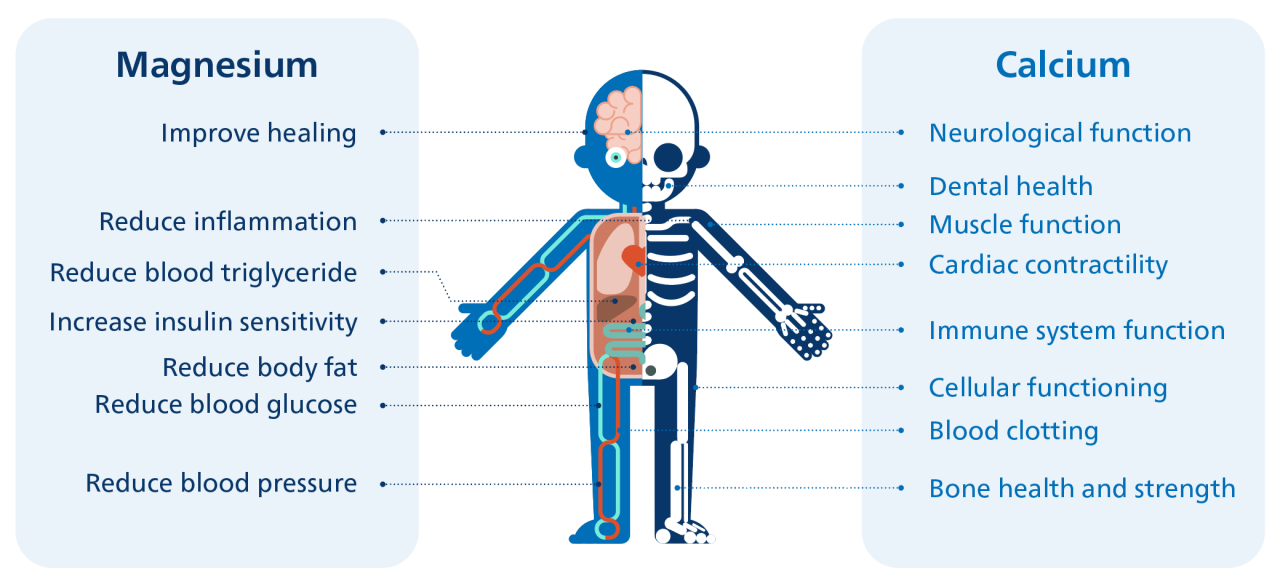
Drinking water contributes significantly to daily calcium and magnesium intake. These minerals are essential for a wide range of physiological processes and their prolonged low concentration in drinking water (such as pure water) may contribute to a decrease in their overall levels in the body, especially in the absence of adequate dietary sources. Magnesium is essential for maintaining muscle function, bone strength, and heart health3. Low magnesium levels in drinking water may increase the risk of death from cardiovascular disease and stroke. Calcium is also important for maintaining bone density, transmitting nerve signals, and muscle contraction4.

The importance of calcium and magnesium for overall health

Figure 1. The importance of calcium and magnesium for overall health 7 & 8 

Understanding total dissolved solids (TDS)

The quality of drinking water depends on its chemical and ionic composition. The minerals dissolved in drinking water affect its quality in terms of healthiness, taste and aesthetics. The Total Dissolved Solids (TDS) measurement represents the sum of the concentrations of all organic and inorganic components dissolved in water, such as ions and minerals. The World Health Organization has established an acceptable limit for TDS for aesthetic and taste consumption, where a concentration below 1000 mg/L is generally considered acceptable for consumers1. The U.S. Environmental Protection Agency (EPA) has established a secondary, non-mandatory regulatory standard in the United States, which relates to aesthetic qualities such as taste and scaling, recommending that TDS does not exceed 500 mg/L5.  While the aesthetic properties don’t affect health, they are important for consumer acceptance of the water.

When water is too pure: corrosion and health risks

Water that contains low or no hardness is considered unhealthy for potable use and is often aggressive towards distribution system components. Drinking water produced with membrane-desalination must be remineralized before storage and distribution as low carbonate alkalinity and calcium may also contribute to increased corrosion in infrastructure.  Because of its lack of salt, pure (low salt) water has a greater ability to dissolve and seek ions to compensate for the deficiency. This makes it slightly acidic, and therefore highly corrosive. This offers the greatest danger to domestic water distribution networks and buildings9.

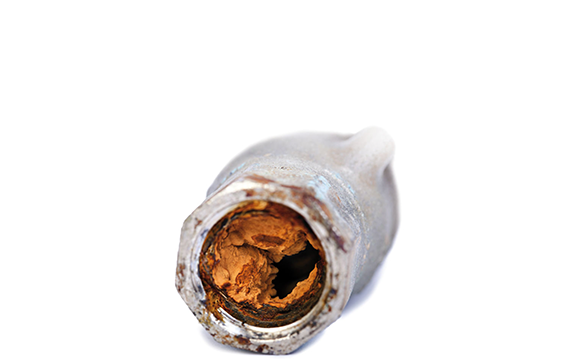
Water corrosion leads to the dissolution and leaching of metals from plumbing materials and fixtures, which not only damages the infrastructure but also has a significant impact on human health. Corrosion can cause levels of toxic metals such as lead and copper to increase and the risks to public health associated with such exceedances are considered high due to the adverse health impacts associated with these metals6. Lead is a potent neurotoxin and nephrotoxin that accumulates in the body, causing irreversible brain damage, cognitive decline (lower IQ), and behavioural issues, especially in children. It causes chronic kidney disease by damaging tubules and reducing filtration rates. It also harms the nervous system by disrupting neurotransmitters and damaging the myelin sheath10.

  • Figure 2. Demineralized water impact on metals

     Demineralized water impact on metals

How remineralization protects water, infrastructure and people

The remineralization process adds calcium and bicarbonates which increase alkalinity, providing stability in the water and contributing to its scale-forming properties. This creates a protective deposit of calcium carbonate on the internal surfaces of pipes and equipment. We recommend injection of carbon dioxide followed by the filtration of water using calcium carbonate. This will remineralize the water and achieve the calco-carbonic balance, which is necessary to protect health, improve taste, and protect equipment.”

Looking to optimise your drinking water treatment process? Contact Omya’s Water Treatment team to explore tailored remineralization solutions that enhance water stability, taste, and safety. 

Curious to expand your knowledge?

Click here to read more and stay updated with the latest articles!