From fertilizer blends to agronomic performance

How Omya granules enhance nutrient efficiency, soil function, and long-term value.

Granules Omya Magprill

For fertilizer producers and distributors, blending is ultimately about delivering measurable agronomic value in a single, efficient application. While physical compatibility is a prerequisite, real differentiation lies in what each blend component contributes to crop performance and soil function.

Omya granules are selected not simply because they blend well, but because they enhance the effectiveness of fertilizer programs through nutritional support, soil structure improvement, and pH management, key drivers of nutrient availability and fertilizer efficiency. 

Nutritional value that supports fertilizer efficiency

Many conventional fertilizers focus primarily on nitrogen, phosphorus, and potassium, while secondary nutrients are addressed separately or inconsistently. Omya granules allow blenders to integrate calcium, magnesium, and sulfur directly into fertilizer blends, ensuring these nutrients are applied uniformly and predictably together with NPK.


Calcium plays a central role in root development, cell wall formation, and nutrient uptake, while magnesium is essential for photosynthesis and closely interacts with phosphorus and potassium. Sulfur is critical for protein synthesis and the efficient utilization of nitrogen. By incorporating Omya granules into fertilizer blends, producers can deliver these nutrients alongside primary nutrients, supporting balanced crop nutrition and helping crops make better use of applied inputs.


This approach shifts secondary nutrients from an add‑on to an integral part of the fertilizer formulation and sets the foundation for addressing the soil conditions that ultimately determine nutrient availability and uptake.

Nutritional value fertilizer

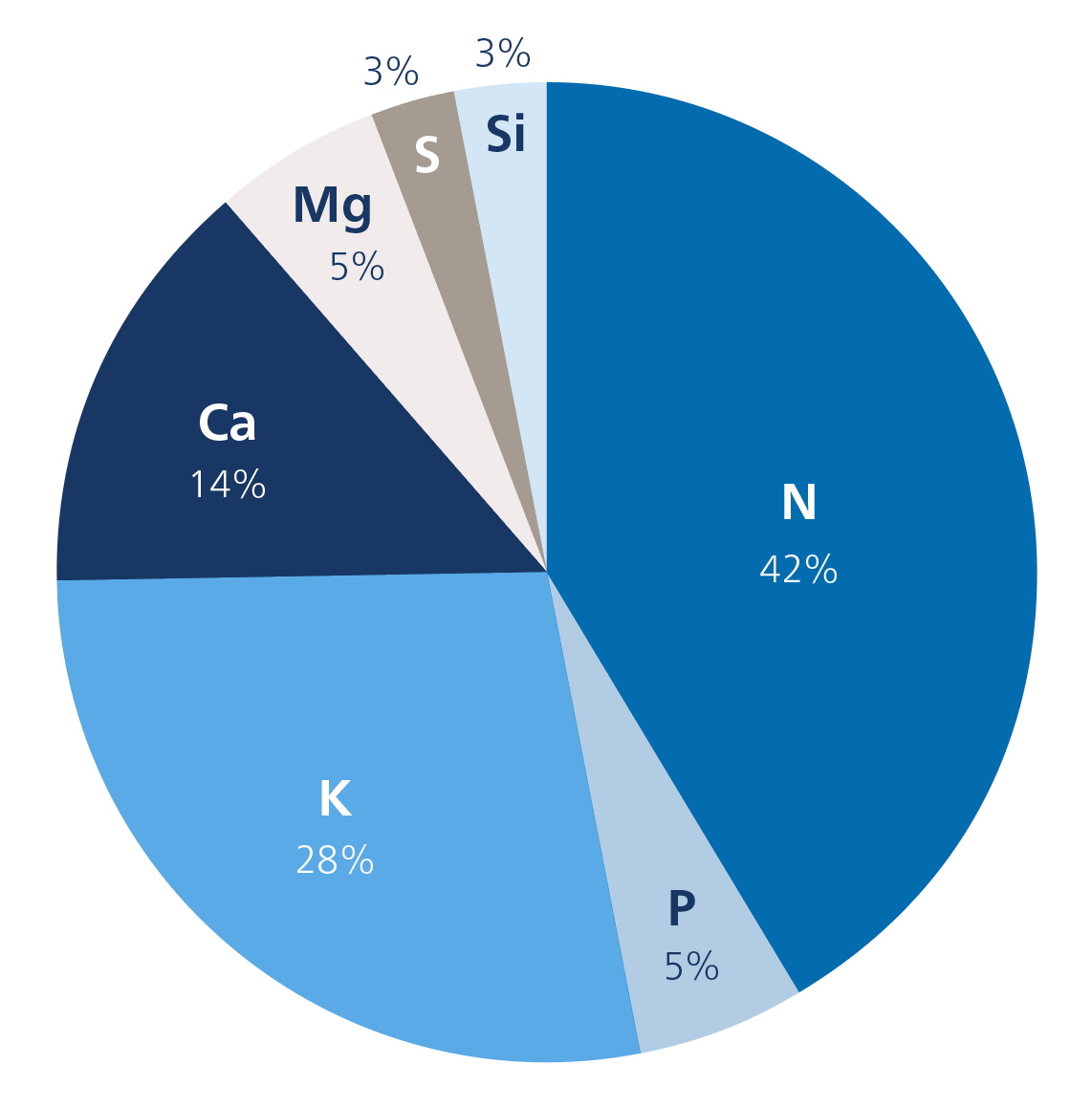
Figure 1. Tissue levels of essential elements required by most plants

Source: Adapted from Epstein (1999) - Importance of secondary nutrients to plant mineral nutrition, values normalized to 100% macronutrients.

Soil structure as a driver of fertilizer performance

The effectiveness of fertilizer is not determined by nutrient supply alone, but by how well roots can access those nutrients. Soil structure is therefore a decisive factor in overall fertilizer efficiency.


Omya granules contribute calcium and magnesium in forms that support soil aggregation and soil physical stability. Adequate calcium promotes flocculation of soil particles, improving pore structure, air exchange, and water infiltration. Better soil structure enhances root penetration and reduces the risks of compaction, surface runoff, and nutrient losses.


When integrated into fertilizer blends, Omya granules help address not only nutrient supply, but also the soil conditions that govern nutrient availability, making fertilizers more effective under real field conditions. Alongside soil physical properties, soil chemistry, particularly pH, plays a decisive role in nutrient performance.

Soil structure

pH management as part of the fertilizer program

Soil pH strongly influences nutrient solubility, microbial activity, and root uptake. Many widely used nitrogen fertilizers contribute to soil acidification over time, gradually reducing the effectiveness of applied nutrients.

By integrating calcium‑ or magnesium‑based Omya granules into fertilizer blends, blenders can introduce pH‑buffering capacity as part of the fertilization strategy itself. This helps counteract acidifying effects without requiring separate liming applications, supporting a more stable pH environment for nutrient uptake.

For blenders, this means fertilizer formulations that not only feed the crop but also protect the soil’s ability to deliver nutrients efficiently over time - an increasingly important expectation among growers, advisors, and regulators.

Turning blend components into agronomic advantages

Selecting blending components is more than a technical exercise; it is a formulation decision that directly influences field performance. Through the targeted contribution of secondary nutrients, soil-structural support, and pH buffering effects, Omya granules help translate fertilizer formulations into more efficient and reliable agronomic performance.

For producers facing increasing cost pressure and higher performance expectations, this approach moves fertilizer blends beyond simple nutrient combinations toward solutions that actively support nutrient uptake, soil function, and long-term effectiveness rather than simply adding nutrients.

Secondary nutrients designed to work within the blend

Omya Calciprill®, Magprill® and Sulfoprill® each contribute distinct agronomic benefits when included in fertilizer formulations.

Omya Calciprill supplies readily available calcium to support soil pH management, root development, and soil aggregation, helping maintain nutrient availability over time. 

Omya Magprill complements this by delivering both calcium and magnesium, supporting photosynthesis, nutrient interactions, and soil structure where balanced Ca:Mg nutrition is required. 

Omya Sulfoprill provides continuously plant‑available sulfur alongside calcium, supporting efficient nitrogen utilization and protein synthesis without contributing to soil acidification.

Used individually or in combination, these granules allow blenders to integrate secondary nutrients and soil-supporting functions directly into fertilizer programs. The result is a more resilient formulation approach, focused not only on nutrient supply, but on how nutrients perform in the soil–plant system.

For blenders looking to translate these principles into practice, Omya’s blending guides provide practical guidance on formulation options, compatibility, and integration into existing fertilizer programs. Contact us to access the full guides.

Curious to expand your knowledge?

Click here to read more and stay updated with the latest articles!