Crop sensitivity to increasing heat and radiation
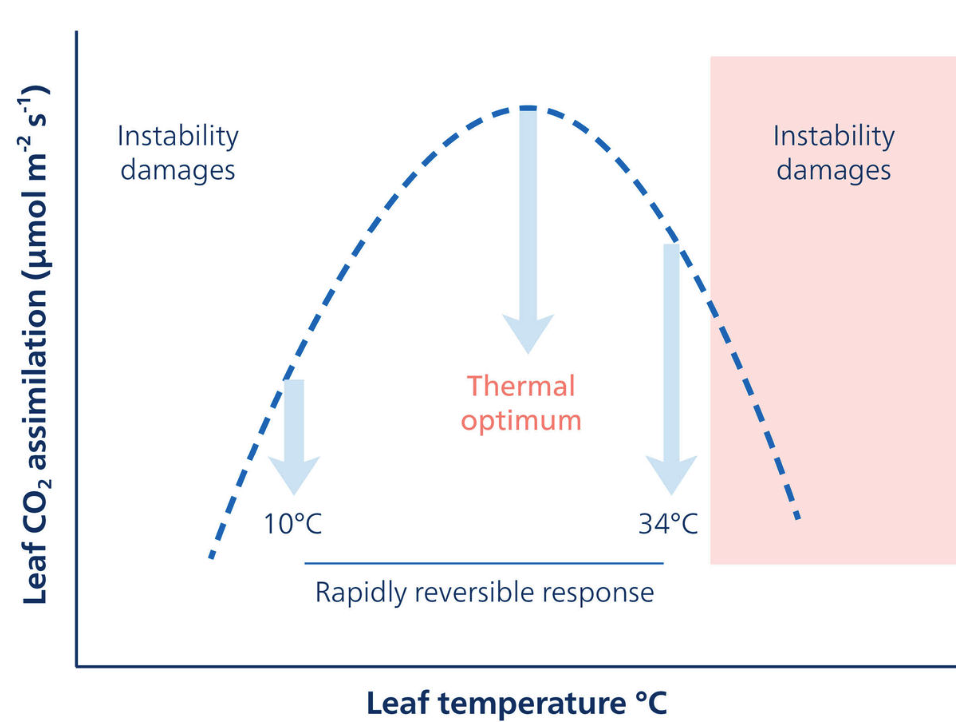
At the same time, intense solar radiation, particularly ultraviolet and infrared wavelengths, can damage leaf tissue, cause sunburn on fruits, and impair plant water balance. These stresses are often compounded by limited water availability, making it harder for crops to cool themselves naturally.
Several economically important crops show high sensitivity to these combined stresses:
Tomatoes are particularly vulnerable to heat stress during flowering and fruit set. Temperatures above optimal ranges can lead to pollen sterility, poor fruit set, and physiological disorders such as sunscald and blossom end rot.
Watermelon and apples are sensitive to excessive heat and radiation, which can reduce fruit size, impair sugar accumulation, and cause surface damage, directly affecting marketability.
Olive trees, although traditionally adapted to warm climates, are increasingly exposed to extreme heat events that reduce photosynthetic efficiency, increase oxidative stress, and negatively impact oil yield and quality, especially during fruit development and oil accumulation.
As these climatic pressures intensify, growers face a growing challenge: how to protect crops from excessive heat and radiation without interfering with normal plant functions. Traditional shading or irrigation strategies alone are often insufficient, costly, or limited by water availability.
This has driven interest in micronized particle film technologies such as OmyaPro® Sun, designed to mitigate heat and radiation stress directly at the leaf and fruit surface.
How particle film technology helps
OmyaPro Sun offers an effective and sustainable solution to this challenge. Based on high-purity calcium carbonate, it is a finely milled particle film designed to reflect excess solar radiation while still allowing sufficient light for photosynthesis. When applied to crops, it forms a uniform, white protective layer on leaves and fruits that reduces surface temperature and limits heat stress during periods of intense radiation.
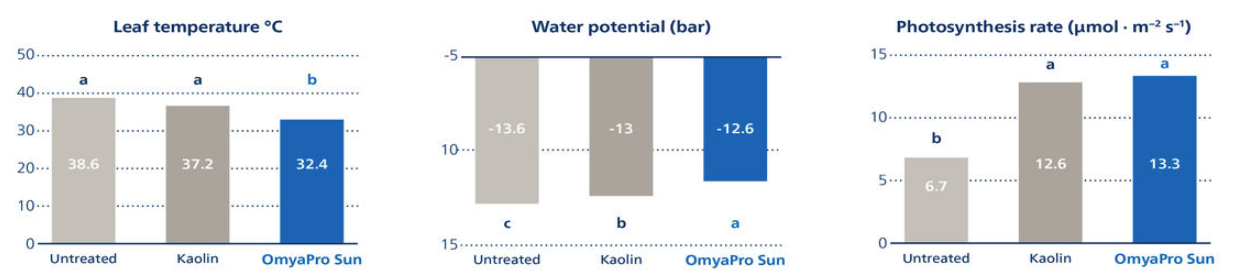
By reflecting a portion of incoming solar energy, OmyaPro Sun helps crops maintain a more favourable canopy temperature, reducing transpiration and improving water use efficiency.
This effect is illustrated by field data from vineyards, where applications of OmyaPro Sun resulted in reduced leaf temperatures, improved plant water status, and the maintenance of a favorable photosynthetic rate under high‑radiation conditions (Fig. 2).