Calcium in citrus

A key nutrient for fruit quality, storability, and disease resilience

Stunning view of orange trees with bright ripe orange fruits on citrus plantation in Sóller on Majorca island; Shutterstock ID 1961293879; purchase_order: EVS; job: EVS; client: EVS; other: EVS
1961293879
Share

Although calcium is fundamental for fruit structure and stability, its role in citrus nutrition has often been misinterpreted. High calcium levels were historically associated with restricted root growth in calcareous soils. This interpretation is now known to be misleading. The observed negative effects were not caused by calcium itself, but by high soil pH and associated nutrient imbalances, particularly reduced availability of phosphorus, iron, and micronutrients.

In reality, an adequate and available calcium supply is essential for root development, cell stability, and overall plant resilience. This improved understanding positions calcium as a cornerstone of citrus nutrition, directly influencing fruit quality, storability, and disease tolerance.

Role of calcium in citrus physiology

Calcium is a structural nutrient essential for the formation and stability of plant cell walls. As a key component of calcium pectate, it strengthens the middle lamella and ensures adhesion between cells. In citrus, this translates into firm fruit tissues, improved rind strength, and increased resistance to mechanical stress. Calcium also limits the enzymatic degradation of cell wall components, reducing the risk of physiological disorders such as albedo breakdown.

A defining characteristic of calcium is its low mobility within the plant. Once deposited, it cannot be redistributed to new tissues. Consequently, a continuous supply from the soil is required, particularly during early fruit development when cell division and expansion are most active.

In commercial citrus production, annual calcium uptake can reach approximately 150–250 kg Ca per hectare, depending on yield and orchard conditions, highlighting the need for a consistent and well-managed calcium supply. Adequate calcium supply has been shown to substantially reduce fruit cracking and can improve yield in citrus, especially where calcium availability is limiting.
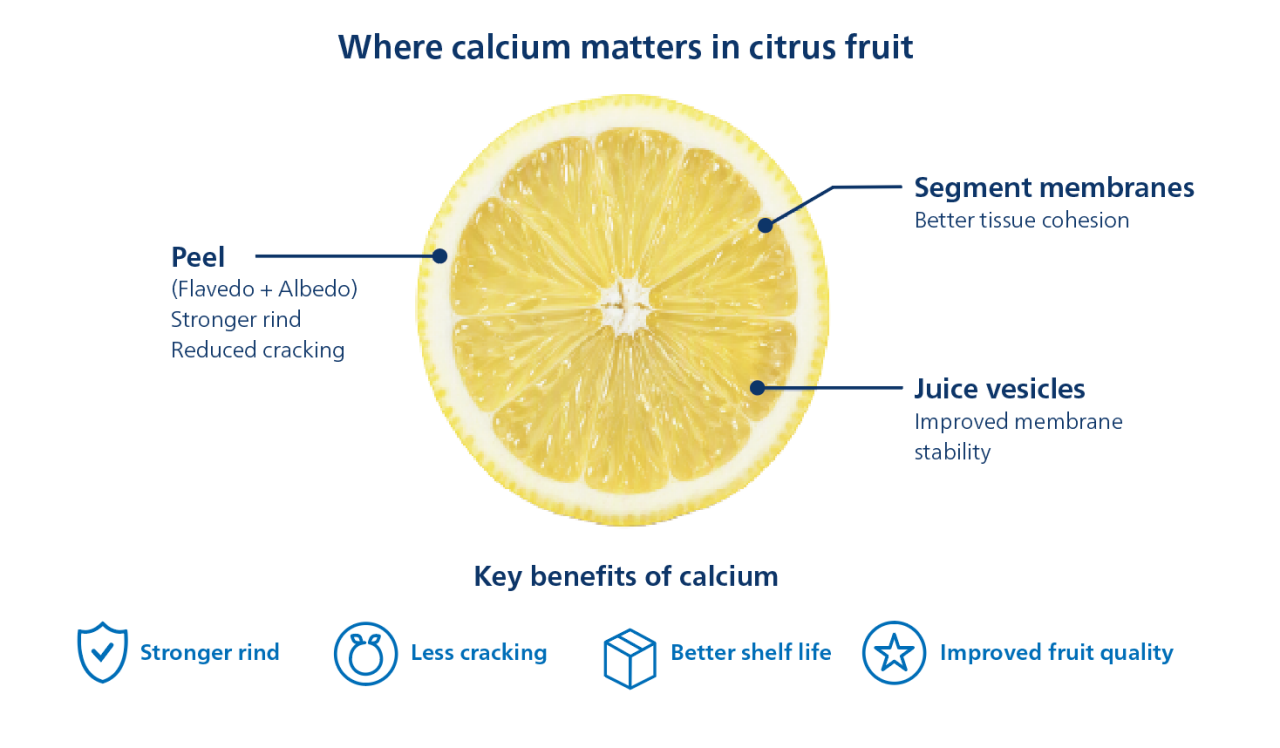
Where calcium matters in citrus fruit

Impact on fruit quality and storability

Calcium plays a central role in determining citrus fruit quality and post-harvest performance. Adequate supply leads to stronger rind tissues, reducing susceptibility to cracking, splitting, and mechanical damage. It also contributes to slower softening and lower respiration rates, supporting extended shelf life.

In contrast, calcium deficiency weakens tissue structure and increases the incidence of disorders such as peel breakdown, rind collapse, and creasing. Maintaining sufficient calcium levels is therefore essential to preserve fruit integrity and minimize post-harvest losses.

Calcium and disease resilience

The effect of calcium on disease is primarily indirect but highly relevant. Low calcium levels weaken tissue structure and increase cellular leakage, creating favorable conditions for pathogens such as Penicillium spp.. In contrast, calcium-rich tissues are more structurally stable and less prone to infection.

By maintaining cell wall cohesion and membrane integrity, calcium reduces the physiological susceptibility of fruit to breakdown and pathogen invasion, making it a key factor in managing post-harvest losses.

Calcium carbonate as an excellent calcium source

Calcium can be supplied through several fertilizers, including calcium nitrate, calcium chloride, and gypsum. However, finely ground, reactive calcium carbonate (CaCO₃) offers distinct advantages as a soil-applied source.

Its main benefit lies in its dual function: supplying calcium while regulating soil pH by neutralizing acidity. Maintaining optimal soil pH improves nutrient availability and supports root development, thereby enhancing overall nutrient uptake efficiency. In addition, soil pH correction can reshape the root-associated microbiome toward more beneficial communities, which may contribute to improved tolerance to HLB (Huanglongbing) known as the citrus greening disease.

Calcium carbonate also ensures a stable calcium supply on the soil exchange complex and reduces competition from other cations such as potassium and magnesium. Compared to highly soluble fertilizers, it provides a gradual and sustained calcium release, reducing leaching losses and contributing to long-term soil improvement.

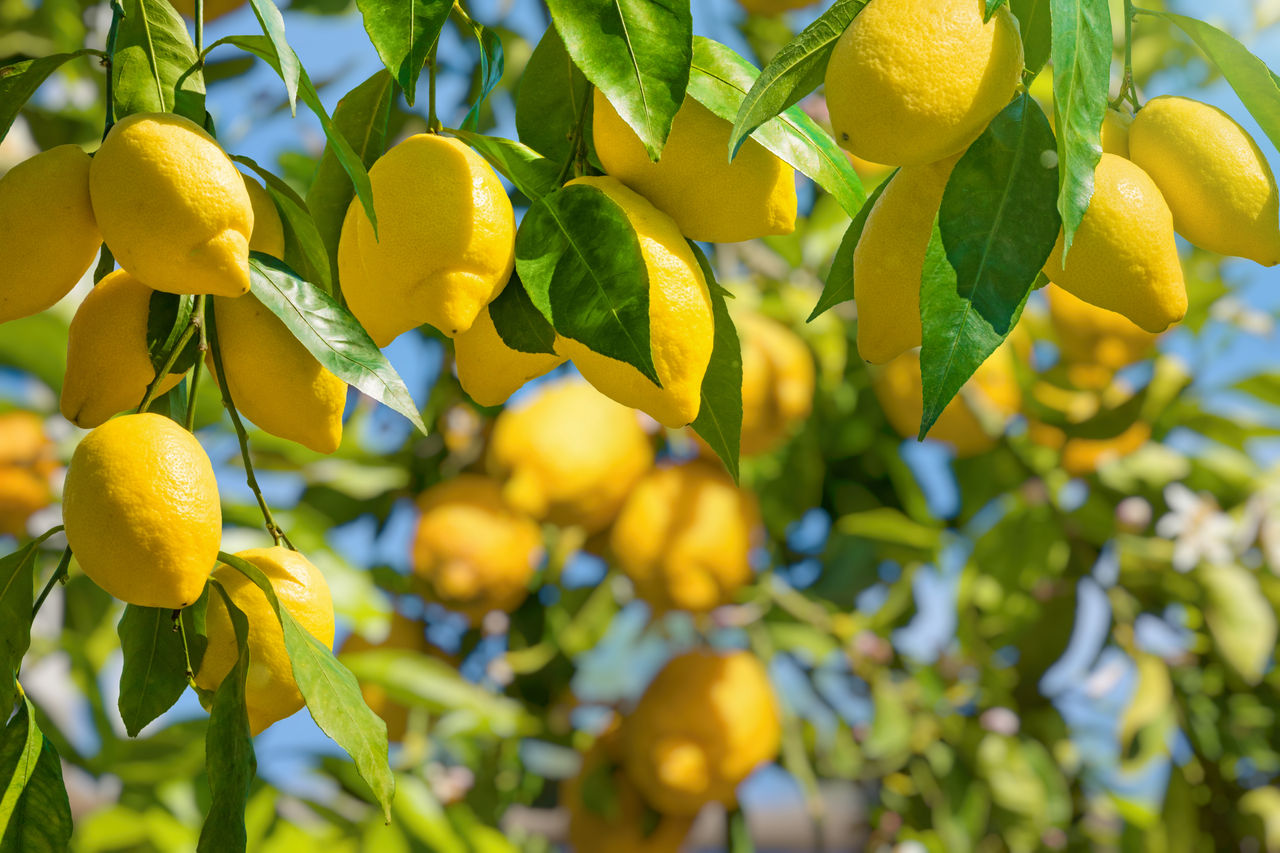
Lemon garden in Italian Amalfi coast ready for harvest. Bunches of fresh yellow ripe lemons with green leaves.; Shutterstock ID 1538118230

Practical considerations

Optimizing calcium nutrition requires an integrated approach. Regular soil analysis is essential to monitor pH and calcium status, while the use of reactive calcium carbonate helps maintain a stable baseline of calcium availability.

Effective water management and root health are equally critical, as calcium uptake depends on transpiration and active root systems. In high-yielding or stress-prone orchards, maintaining a consistent calcium supply is particularly important to ensure structural stability and plant resilience.

If calcium is supplied to citrus plantations as calcium carbonate (CaCO₃), it should be applied before flowering to build a baseline Ca supply in the tree and leveraging its gradual release. For soil pH correction it is best to apply post-harvest or well before flowering, timed according to local rainfall and soil conditions, to ensure adequate soil reaction and calcium availability ahead of early fruit development.

Practical considerations

Optimizing calcium nutrition requires an integrated approach. Regular soil analysis is essential to monitor pH and calcium status, while the use of reactive calcium carbonate helps maintain a stable baseline of calcium availability.

Effective water management and root health are equally critical, as calcium uptake depends on transpiration and active root systems. In high-yielding or stress-prone orchards, maintaining a consistent calcium supply is particularly important to ensure structural stability and plant resilience.

If calcium is supplied to citrus plantations as calcium carbonate (CaCO₃), it should be applied before flowering to build a baseline Ca supply in the tree and leveraging its gradual release. For soil pH correction it is best to apply post-harvest or well before flowering, timed according to local rainfall and soil conditions, to ensure adequate soil reaction and calcium availability ahead of early fruit development.

From nutrition to results

Calcium is a key determinant of citrus fruit quality, storability, and resistance to physiological disorders. Its low mobility within the plant makes continuous uptake essential, linking calcium nutrition closely to soil conditions and root activity.

Calcium carbonate (CaCO₃) provides a robust solution by supplying calcium while improving soil pH and root environment conditions. As part of a balanced nutrition strategy, it supports consistent calcium uptake, maintains tissue integrity, and contributes to more resilient citrus production systems.

Curious to expand your knowledge?

Click here to read more and stay updated with the latest articles!