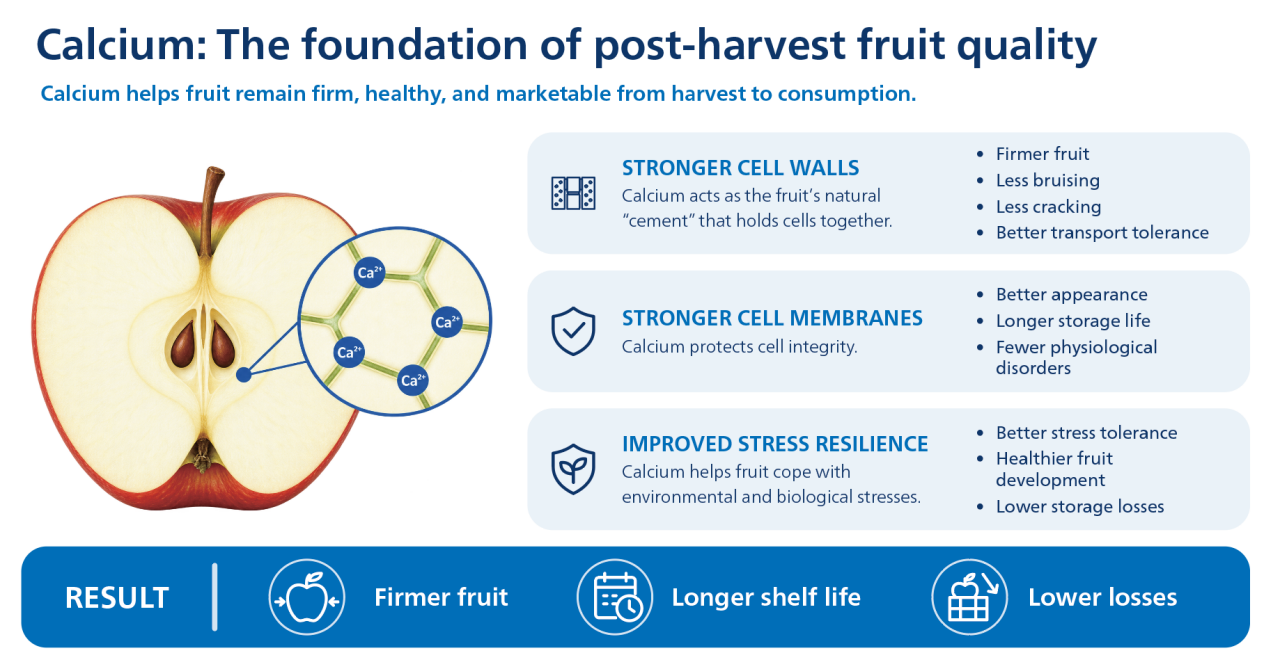
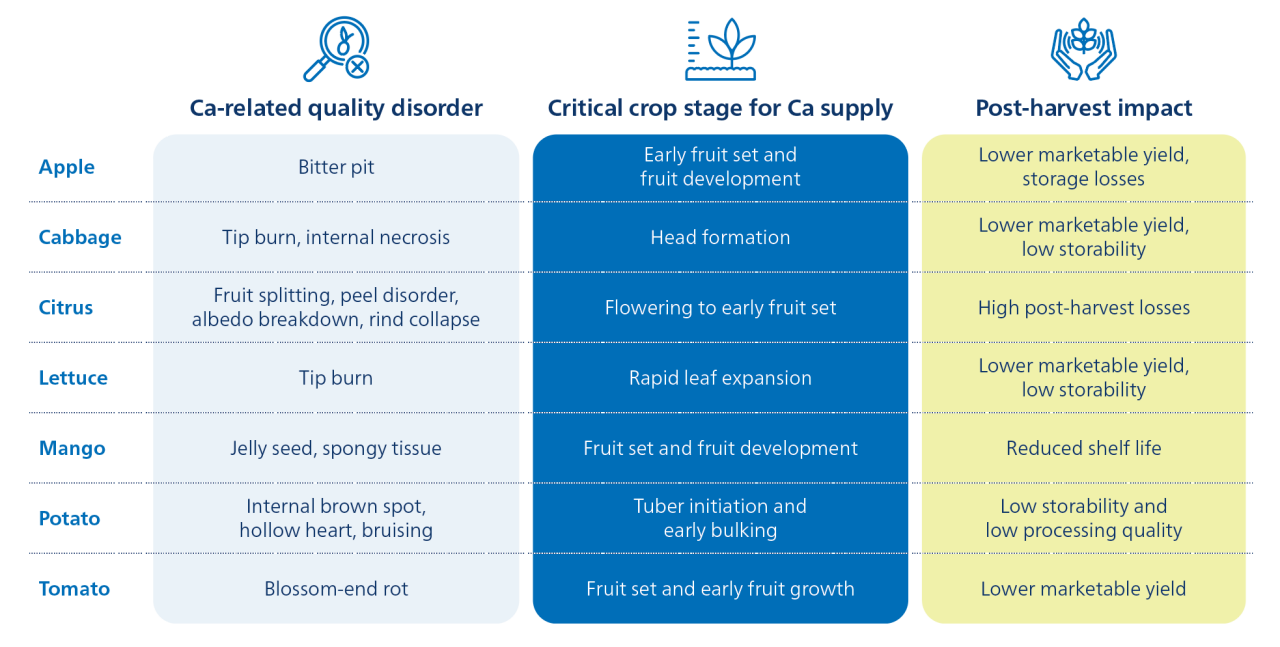
Calcium-rich tissues are generally more structurally stable and less prone to pathogen infection. By strengthening cell walls, stabilizing membranes, and reducing cellular leakage, calcium helps maintain natural barriers against infection. Increased fruit calcium concentrations have been associated with reduced susceptibility to pathogens such as Botrytis spp., while calcium nutrition can also improve resistance of potato tubers to soft rot. Together, these effects contribute to lower post-harvest losses, improved marketability and enhanced post-harvest quality.
Post-harvest quality starts in the field
Post-harvest quality is built long before harvest and starts from the field. Fruit firmness, fruit shelf life, storability, resistance to bruising, and tolerance to transport are largely determined during crop development. Unlike nutrients such as nitrogen, phosphorus, and potassium, calcium is only sparingly mobile within the plant. Once deposited in tissues, it cannot be readily redistributed to developing fruits. A continuous supply of calcium from the soil throughout the growing season, particularly during periods of active cell division and early fruit development, helps build stronger fruit tissues, improving firmness, extending shelf life, and ultimately reducing losses from the field to the consumer.
Managing calcium for better post-harvest quality
An integrated calcium management strategy begins before planting with soil analysis to assess pH, exchangeable calcium levels, and other factors that may influence calcium availability. During crop development, tissue and, where appropriate, fruit analysis can help confirm that sufficient calcium is reaching the target organs where quality is ultimately determined.
Where soils are acidic and calcium levels are low, calcium carbonate (CaCO₃) offers a dual benefit by correcting soil acidity while replenishing exchangeable calcium reserves. Improving soil pH also promotes root growth and nutrient availability, creating the favourable conditions for consistent calcium uptake throughout the season.
When soil pH is already within the optimum range, calcium should be supplied through non-liming sources, such as gypsum or soluble calcium fertilizers, to maintain adequate calcium nutrition without increasing soil pH.
Successful calcium management extends beyond fertilizer selection. Because calcium is transported in the xylem with transpiration-driven water flow, adequate soil moisture and a healthy root system are essential for continuous calcium delivery to developing fruit. Particular attention should be paid during the early stages of fruit development, when cell division and tissue formation determine much of the fruit's future firmness, storability, and resistance to post-harvest losses.
Practical recommendations for maintaining fruit quality
- Test soil pH and exchangeable calcium before planting or at regular intervals for perennial crops.
- Monitor tissue and, where appropriate, fruit calcium concentrations during the season.
- Maintain optimum soil pH to support calcium availability and root growth.
- Ensure adequate soil moisture and root health to support calcium uptake.
- Supply calcium early and consistently throughout fruit development.
- Select calcium sources according to soil pH requirements and crop needs.
- With fruits and vegetables experiencing some of the highest losses in the food supply chain, improving post-harvest quality is an important opportunity to enhance both profitability and sustainability.
Calcium plays a unique role in this effort by helping fruit retain firmness, post-harvest quality and shelf life from the moment it forms on the tree or plant until it reaches the consumer. Want to improve post-harvest fruit quality? Contact us