Liquid-to-powder conversion: how to reduce flavour loss

Explore how carrier technologies can help preserve flavor integrity and improve the conversion of liquid ingredients into stable food powders.
Young sporty woman pouring protein powder into a cup to make replacement food meal after workout; Shutterstock ID 2190056765; purchase_order: Omya Life Science; job: ; client: ; other:
Share

From sports nutrition powders and beverage mixes to dietary supplements and flavour systems, many food products rely on converting liquid ingredients into stable, free-flowing powders. However, transforming liquid flavours into powder form is not always straightforward. Particularly flavour compounds are volatile and heat-sensitive to processing and storage conditions, meaning valuable aroma components can be lost before the final product reaches consumers. Traditional technologies such as spray drying and encapsulation have helped address this challenge for decades, yet they still involve processing steps that may impact flavour integrity.

The challenge: preserving flavour while creating powders

Traditional technologies remain effective, but the food industry continues to explore approaches that minimise thermal exposure and simplify processing. One promising route is the use of highly porous carrier materials capable of absorbing liquid ingredients directly and converting them into powders through simple blending processes.
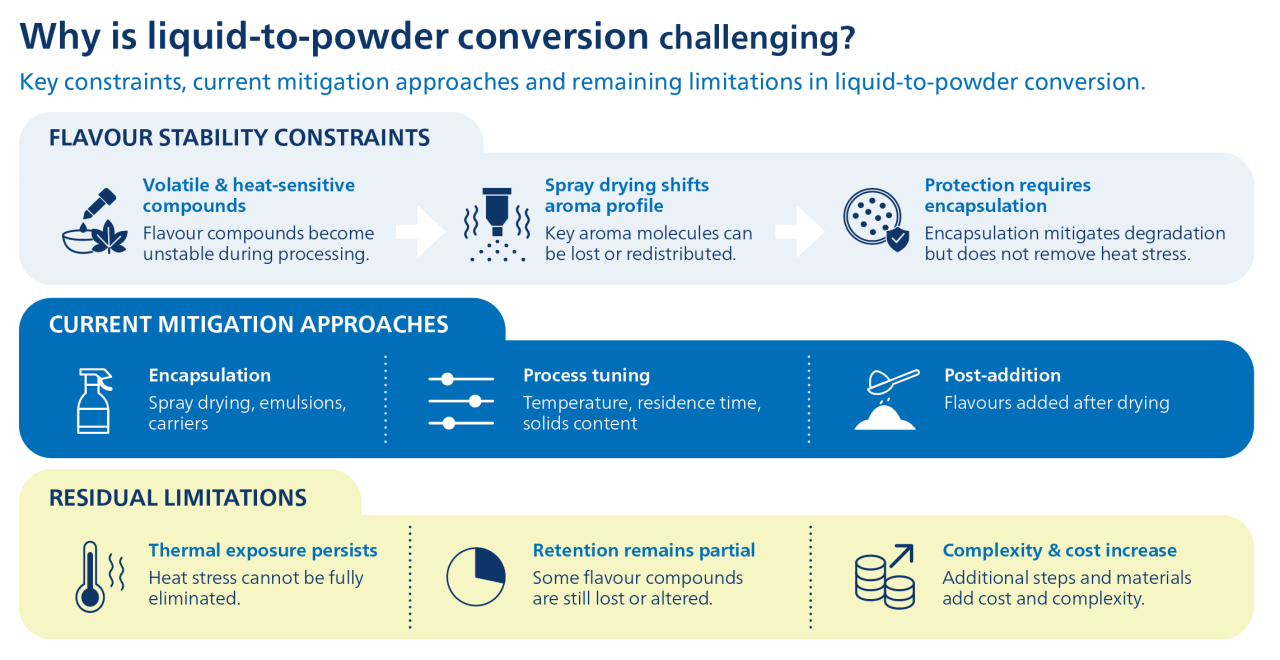
PCA Score plot Figure 1. Key constraints, current mitigation approaches and remaining limitations.

Carrier technologies are evolving

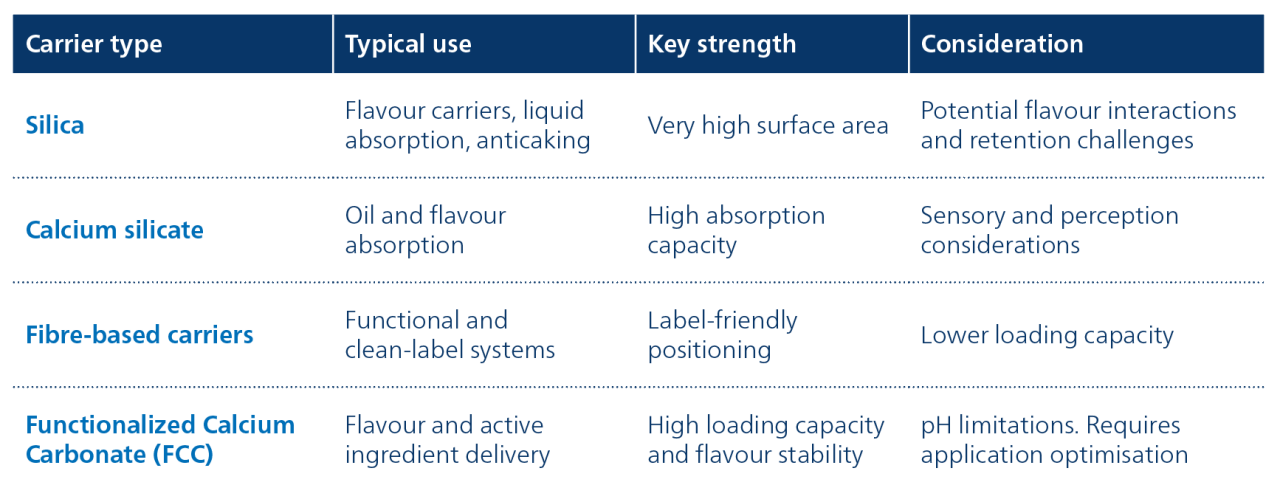
Several carrier technologies are commonly used to transform liquids into powders. Each offers unique advantages, but their performance can vary depending on the application and ingredient being delivered. 

PCA Score plot Figure 2. Carrier technologies at a glance.

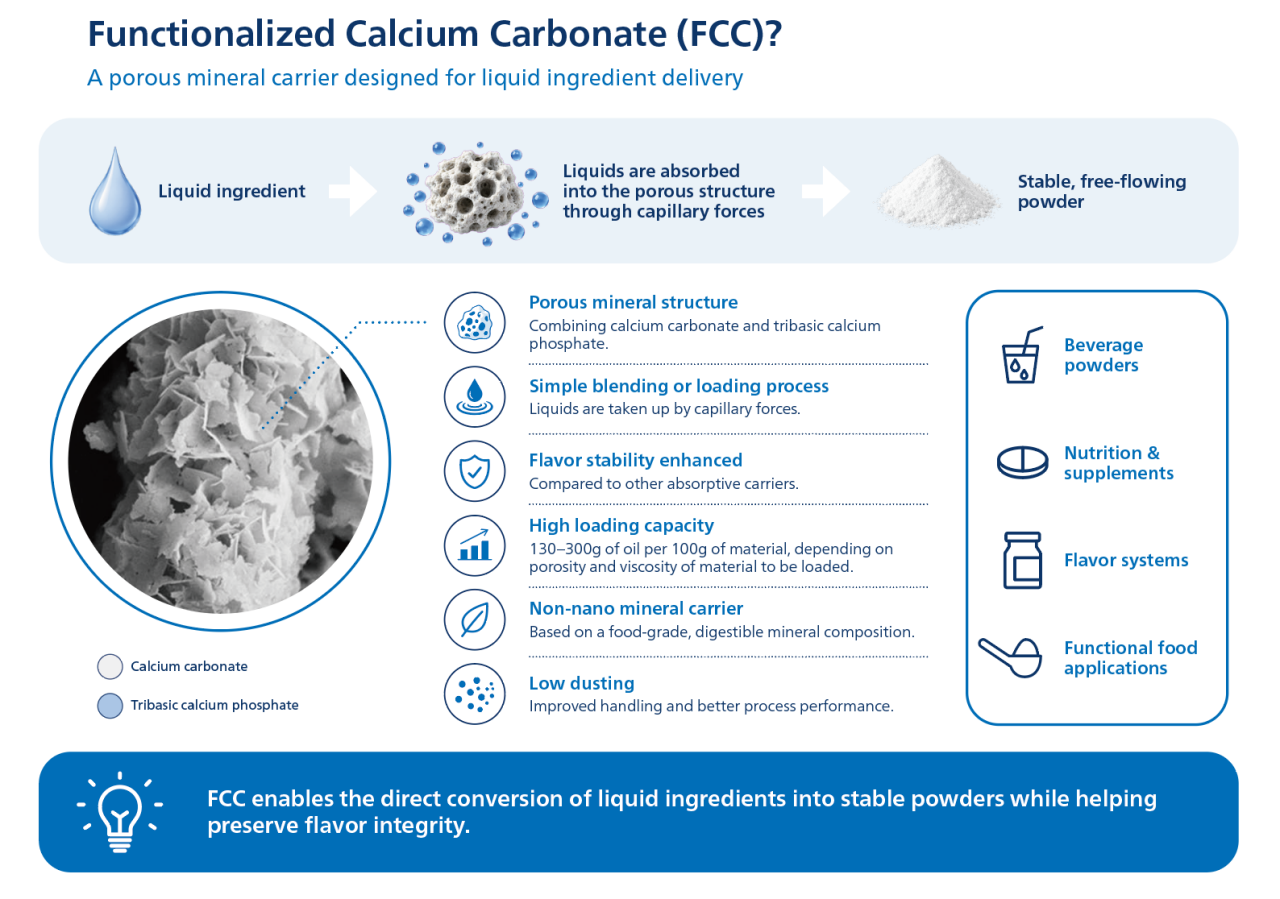
A newer generation of mineral carriers is based on Functionalized Calcium Carbonate (FCC), a porous structure combining calcium carbonate and tribasic calcium phosphate. Liquids are absorbed through capillary forces, creating stable and free-flowing powders without the need for energy-intensive conversion processes. FCC is also characterised by high liquid loading capacity, low dusting behaviour and digestible mineral composition.

PCA Score plot Figure 3. Functionalized Calcium Carbonate (FCC): a porous mineral carrier designed for liquid ingredient delivery.

Looking beyond loading capacity

For formulators, loading capacity is only part of the story. The real challenge is maintaining flavour quality throughout storage. Long-term flavour stability is ultimately what determines whether the original flavour reaches the consumer.

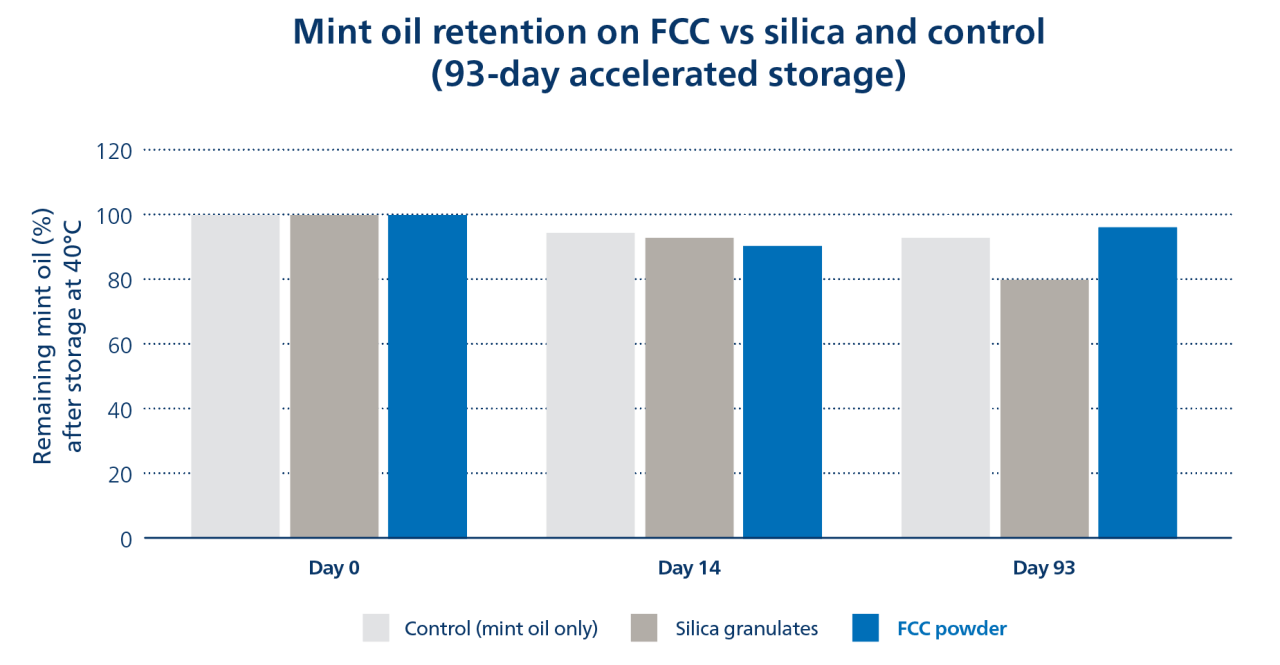
Accelerated storage studies using mint oil as a model flavour showed that FCC maintained higher flavour recovery compared with conventional silica-based carrier systems. After prolonged storage at elevated temperature, compounds on FCC remained largely unchanged as the flavor in liquid form, demonstrating the importance of carrier selection in preserving flavour quality over time.

PCA Score plot Figure 4. Accelerated storage study demonstrating higher mint oil recovery on FCC compared with silica carriers.

More than flavor preservation

The benefits of porous carrier technologies may extend beyond flavour stability. Because liquids can be loaded directly into the carrier material, manufacturers can potentially simplify production workflows and reduce reliance on more complex thermal conversion processes. The technical evaluation highlighted opportunities for process simplification, reduced energy consumption and improved sustainability compared with conventional conversion routes.

As food manufacturers continue to balance taste, functionality and sustainability, carrier technologies are becoming increasingly important tools for innovation. The ability to convert liquid ingredients into stable powders while preserving flavour performance opens new opportunities across sports nutrition, powdered beverages, supplements and functional food applications. The future of flavour delivery may depend not only on the ingredients themselves, but also on the carrier systems that protect them from production through consumption.

Developing your next powder formulation? Discover how carrier selection can influence flavour stability, loading capacity and processing efficiency. Contact our team to learn more.

Curious to expand your knowledge?

Click here to read more and stay updated with the latest articles!